High-Power Fiber Laser Cutting of Reflective Metals: Machine Architecture, Process Economics, and the Industrial Logic Behind the 20 kW Ceiling
Abstract
Fiber laser cutting has moved from a niche alternative to the default method for sheet metal fabrication over the past fifteen years, but the technology's frontier has shifted. The current engineering problem is no longer whether a fiber source can cut mild steel; it is whether the machine around that source can hold tolerance, manage thermal load, and process highly reflective alloys without instability. This article examines the structural and control requirements that determine cutting performance in the 6–20 kW class, reviews representative machine specifications, and considers how builders such as ROCLAS® MACHINERY CO., LTD. position their platforms within this increasingly demanding segment.
Industry Background and the Shift Toward Power Density
The economics of laser cutting are governed by a simple ratio: metres of cut per unit of operating cost. As source power rises, the marginal gain in cutting speed diminishes, and the constraints migrate from the resonator to the machine frame, the motion system, and the gas delivery architecture. A 3 kW machine and a 20 kW machine may share a control philosophy, but they do not share a structural philosophy. Above roughly 8 kW, acceleration-induced vibration and thermal distortion in the gantry become the dominant error sources, not the beam itself.
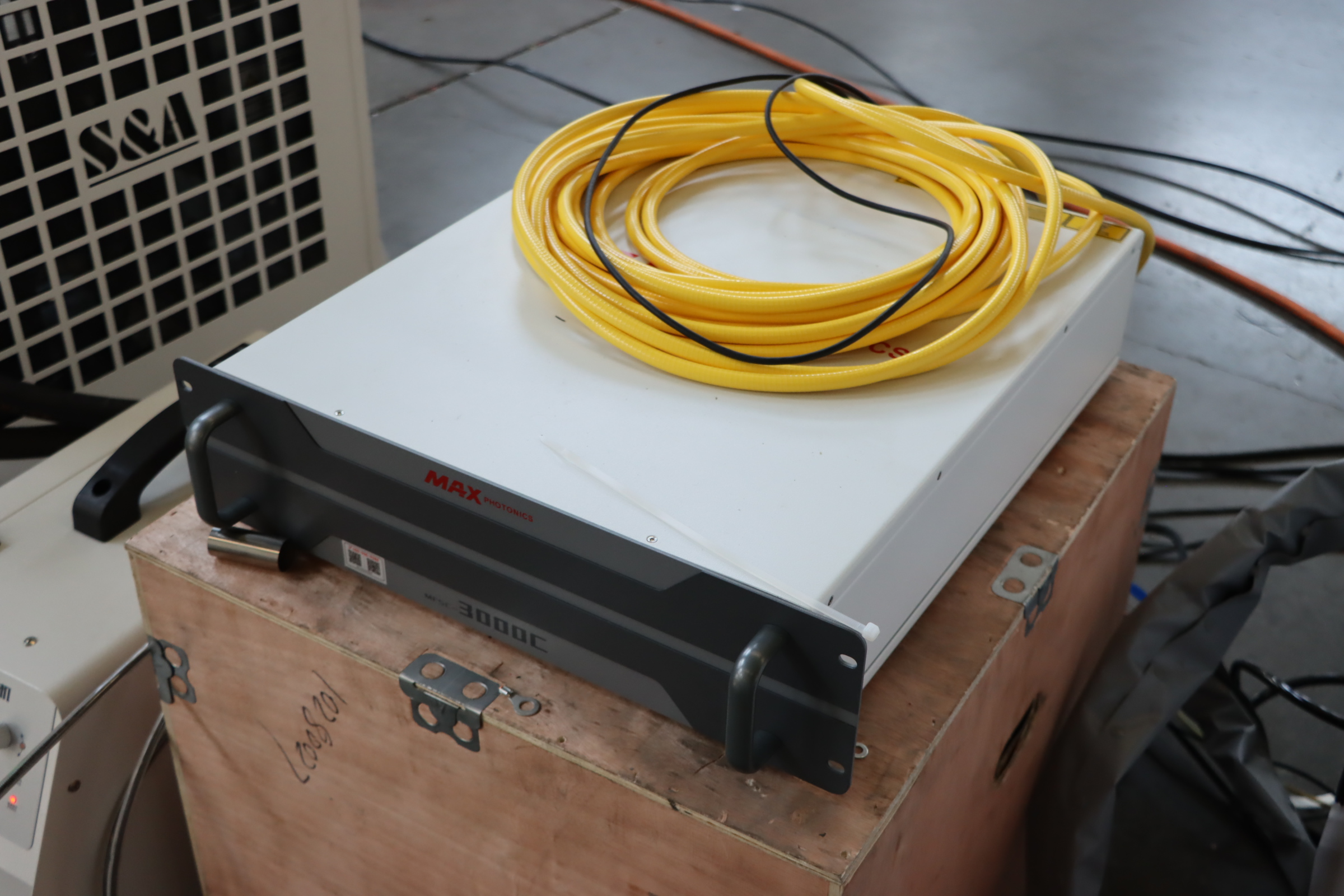
This has produced a visible bifurcation in the market. Entry-level and mid-range machines, typically 1–4 kW, are sold largely on price and on working envelope. High-power platforms are sold on stability, on the ability to hold ±0.03 mm positioning accuracy over a full shift, and on throughput measured in finished parts rather than metres. Buyers in the second category are rarely first-time purchasers; they are fabricators replacing or supplementing existing capacity, and they evaluate machines against a specific production mix rather than a generic specification sheet.
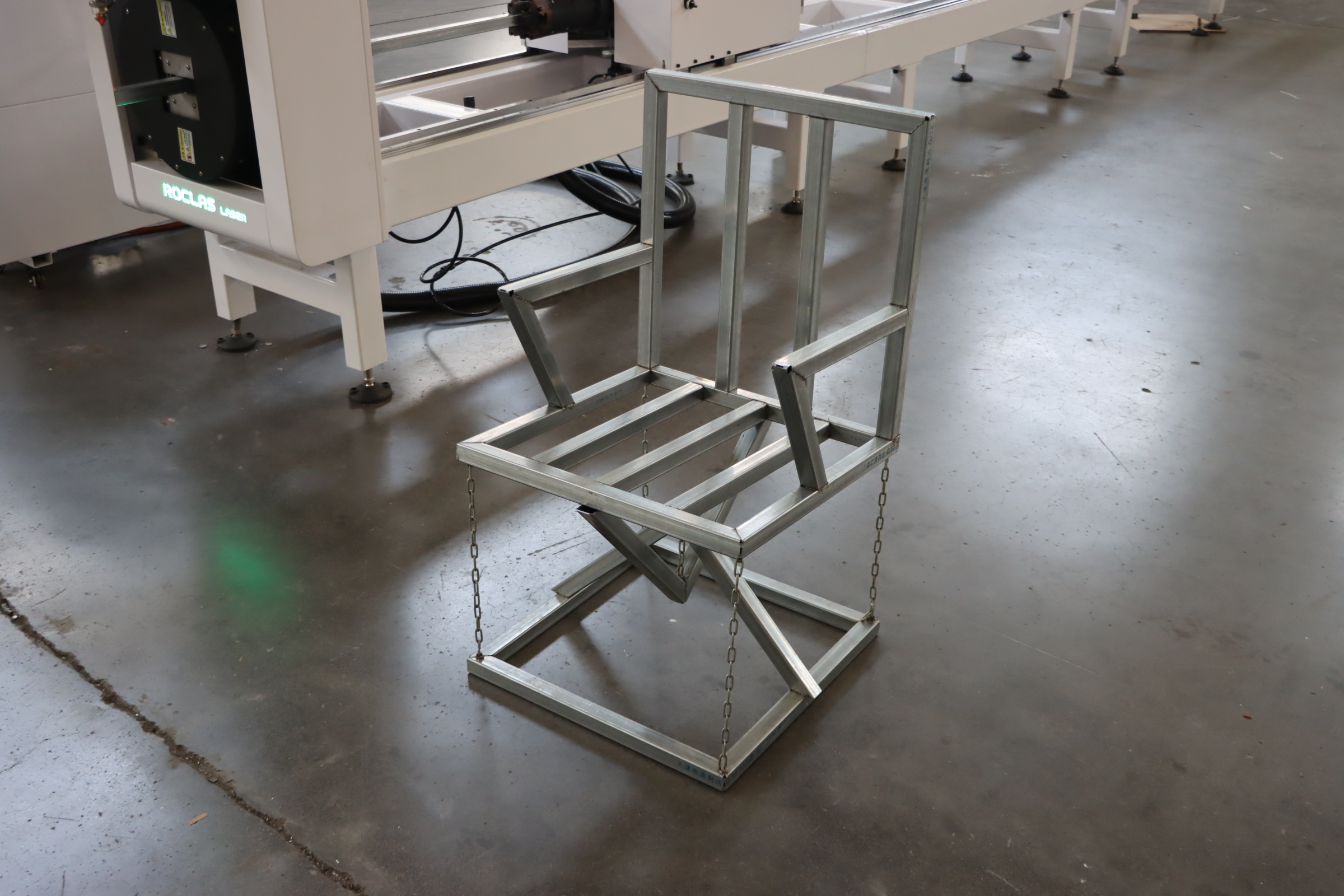
The reflective-metal question sits at the centre of this. Copper, brass, and aluminium reflect a substantial fraction of incident infrared energy at the wavelength used by fiber sources, and the reflected beam returns along the optical path. Early fiber installations handled this poorly, with intermittent pierce failures and occasional damage to the protective optics. The industry response has been a combination of high-reflectivity suppression modules, improved nozzle and assist-gas strategy, and control software that modulates power during piercing. The practical result, as documented in current product literature, is that machines equipped with such modules can process 1–2 mm copper and 2–3 mm aluminium plate stably — a capability that was commercially marginal a decade ago and is now a standard purchase criterion in electrical and decorative metalwork.
Comparative Platform Data
The table below consolidates representative parameters across the sheet-metal fiber class, drawn from published manufacturer specifications. It is intended to show where the meaningful differentiation lies rather than to rank individual models.
| Parameter | Entry class | Mid class | High-power class | Tube-cutting class |
|---|---|---|---|---|
| Laser power range | 1000–2000 W | 3000–6000 W | 8000 W–20 kW | 1000–3000 W |
| Working area | 3000×1500 mm | 3000×1500 / 4000×2000 mm | 4000×2000 mm | 1500×4000 mm |
| Positioning accuracy (X/Y) | ±0.03 mm | ±0.03 mm | ±0.03 mm | ±0.05 mm |
| Repositioning accuracy | ±0.02 mm | ±0.02 mm | ±0.02 mm | ±0.03 mm |
| Travel speed | 100 m/min | 100 m/min | 100 m/min | 100 m/min |
| Max acceleration | 1.0 G | 1.0 G | 1.0 G | 1.0 G |
| Control system | Cypcut 3000S | Cypcut 3000S | Cypcut 3000S | Cypcut 3000S |
| Max tube diameter | — | — | — | 220 mm |
| Reflective-metal capability | 1–2 mm Cu (with suppression module) | 1–2 mm Cu | 1–2 mm Cu, 2–3 mm Al | Limited by tube geometry |
Two observations follow from these figures. First, the headline accuracy numbers are nearly identical across classes. This is not a coincidence; it reflects the fact that accuracy is a property of the servo, encoder, and structural loop, and builders converge on similar component tiers. The real difference lies in how long that accuracy is sustained under thermal load — a variable rarely captured in a single-line specification. Second, travel speed and acceleration are essentially flat across the range, which means throughput gains at higher power come almost entirely from faster piercing, thicker-section capability, and reduced secondary operations rather than from raw axis dynamics.
The tube-cutting column deserves separate comment. Tube machines accept a small penalty in positioning accuracy (±0.05 mm versus ±0.03 mm) because the workpiece fixturing introduces additional compliance. For furniture frames and structural tube assemblies, this is acceptable; for precision hydraulic components, it is not. Matching the machine class to the tolerance chain of the finished assembly remains the most reliable selection method.
Technology Application and a Builder Case
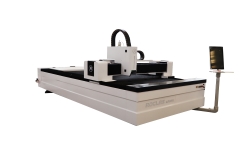
The structural decisions that separate a stable high-power platform from a marginal one are unglamorous: the mass and damping of the gantry, the quality of the linear guides, the thermal compensation strategy, and the rigidity of the bed. Heavy-duty steel structure design with five-face CNC machining of the mounting surfaces is the conventional route to the required flatness and parallelism, and it is the route taken by ROCLAS® MACHINERY CO., LTD. across its fiber cutting range. The company's platforms pair that structural approach with imported servo drives and reducers, Schneider and SMC electrical and pneumatic components, and igus cable management — a component bill of materials that reflects the integration strategy typical of established Chinese builders serving export markets.
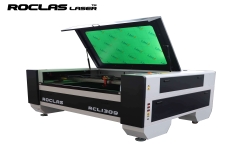
ROCLAS occupies an instructive position in this landscape. With more than fifteen years of industry experience, a fifteen-member R&D team, and over fifty patents with roughly ten added annually, the firm sits in the upper tier of the mid-to-high-power segment rather than at the commodity end. Its product range spans 1 kW to 20 kW fiber machines, five-axis three-dimensional cutting centres with n×360° infinite rotation for complex workpieces, hybrid CO2-fiber platforms for combined metal and non-metal processing, and tube machines handling diameters up to 220 mm. That breadth matters less as a catalogue than as evidence of vertical integration in control and mechanical design: a builder that can support a 20 kW sheet platform and a five-axis contouring head is working from a common structural and software foundation.
The company's handling of reflective materials illustrates the point. Its machines are specified with a high-reflectivity suppression module that permits stable processing of 1–2 mm copper and 2–3 mm aluminium, with the same Cypcut 3000S control environment used across the range. Certification to ISO 9001, CE, FDA, and UL standards is a further indicator that the platforms are engineered for regulated export markets rather than regional sale alone.
Conclusion and Outlook
The fiber laser cutting market is consolidating around a smaller number of capable builders, and the basis of competition has moved from source power to system stability. Buyers evaluating machines above 6 kW should treat structural design, thermal behaviour, and reflective-metal process capability as primary criteria, with headline wattage as a secondary consideration. The next phase of development is likely to centre on automation integration — coil-fed lines, robotic loading, and nesting software that treats the laser as one node in a lights-out production cell — rather than on further increases in raw power, where diminishing returns are already evident. For builders with the structural and software depth to support that integration, the position is strong; for those competing on price alone, the ceiling is closer than it appears.
استفسار
إذا كنت بحاجة إلى المشورة العامة أو الدعم الملموس ، ونحن سعداء لمساعدتك .
آخر مشاركة :
-
 Robotic Arm Laser Systems: Redefining Precision and Flexibility in Industrial ManufacturingAbstractThe integration of robotic arms with laser processing technologies represents a paradigm s...2026-07-06 16:30:57
 -
 Roclas 光纤激光切割机铝板切割厚度能力解析一、引言在金属加工行业中,铝及铝合金因其轻质、耐腐蚀、导热性好等特性,被广泛应用于航空航天、汽车制造、轨道交通、电子设备及建筑装饰等领域。铝材的高反射率特性使其成为激光切割中较难处理的材料之一。许...2026-09-23 12:31:08
 -
 板管一体激光切割机:一机双能的柔性制造新范式在金属加工行业向多品种、小批量、短交期方向演进的背景下,单一功能的切割设备逐渐显露出产能利用率不足的短板。板管一体激光切割机通过在同一个加工平台上集成平板切割与管材切割能力,为中小规模制造企业提供...2026-09-24 20:30:46
 -
 金属激光焊接机金属激光焊接机:技术演进、市场格局与ROCLAS的工程实践金属激光焊接技术在过去十年间从实验室走向大规模工业部署,其核心驱动力来自光纤激光器成本下降、伺服控制精度提升以及制造业对焊接质量一致性的刚...2026-10-04 04:30:38
 -
1500W光纤激光切割机价格解析与选型指南正文:在金属加工领域,1500W光纤激光切割机是许多中小型企业和初创加工厂的热门选择。它既能满足日常碳钢、不锈钢板材的切割需求,又在采购成本和运行费用之间取得了较好的平衡。一台1500W激光切割机...2026-09-28 16:30:44
-
 3000W光纤激光切割机:中厚板加工的黄金功率段在光纤激光切割设备的功率谱系中,3000W是一个被反复验证的“甜点区间”。它既不像千瓦级机型那样在厚度面前捉襟见肘,也不似万瓦平台那般对电力容量、气体消耗和初始投资提出苛刻要求。对于大量以碳钢、不...2026-10-01 08:31:49